An older cousin, Larry, who lived with us for a time, remembered that my dad was always giving us puzzles. There were a few puzzles I couldn’t solve. One was why no one could understand my speech. What was wrong with them, I thought? And the second was about death. What was that about? Was it something to fear? Why did my parents say that "life was for the living" and if we made the right decisions no harm would come to us. I liked math and especially word problems. They were my favorite pastime.
Fast forward to Zen. My first teacher told us that everything has Buddha Nature. Not knowing Mu, but having a couple of dogs, I asked him if dogs had Buddha Nature. He made a somewhat odd expression but kindly didn’t say, “that’s your first koan.”
Then I did a sesshin with a Rinzai zen teacher. The koan was, “What is this?” and time after time I was rung out before I could barely open my mouth. Why couldn’t I figure out this apparently simple koan?
I did take a koan class or two or three. One priest-to-be in the class seemed to get them. I couldn’t understand what they were about. They seemed to be esoteric and to rely on a holy grail with which I wasn’t familiar.
When I was head student I picked what seemed like a simple koan, only to discover that there are no simple koans. And to also discover that they are all simple. Suzuki Roshi said if it isn’t a paradox it isn’t true. Yesterday I asked our head student if there were any simple questions. I haven't found one yet. Maybe I'm coming to realize that I, not the question or koan, make questions difficult.
The koan I chose was the one where Buddha holds up a flower and Kassapa smiles. Every day I did a drawing with words about this koan and ended up doing my three head student dharma talks sharing these.
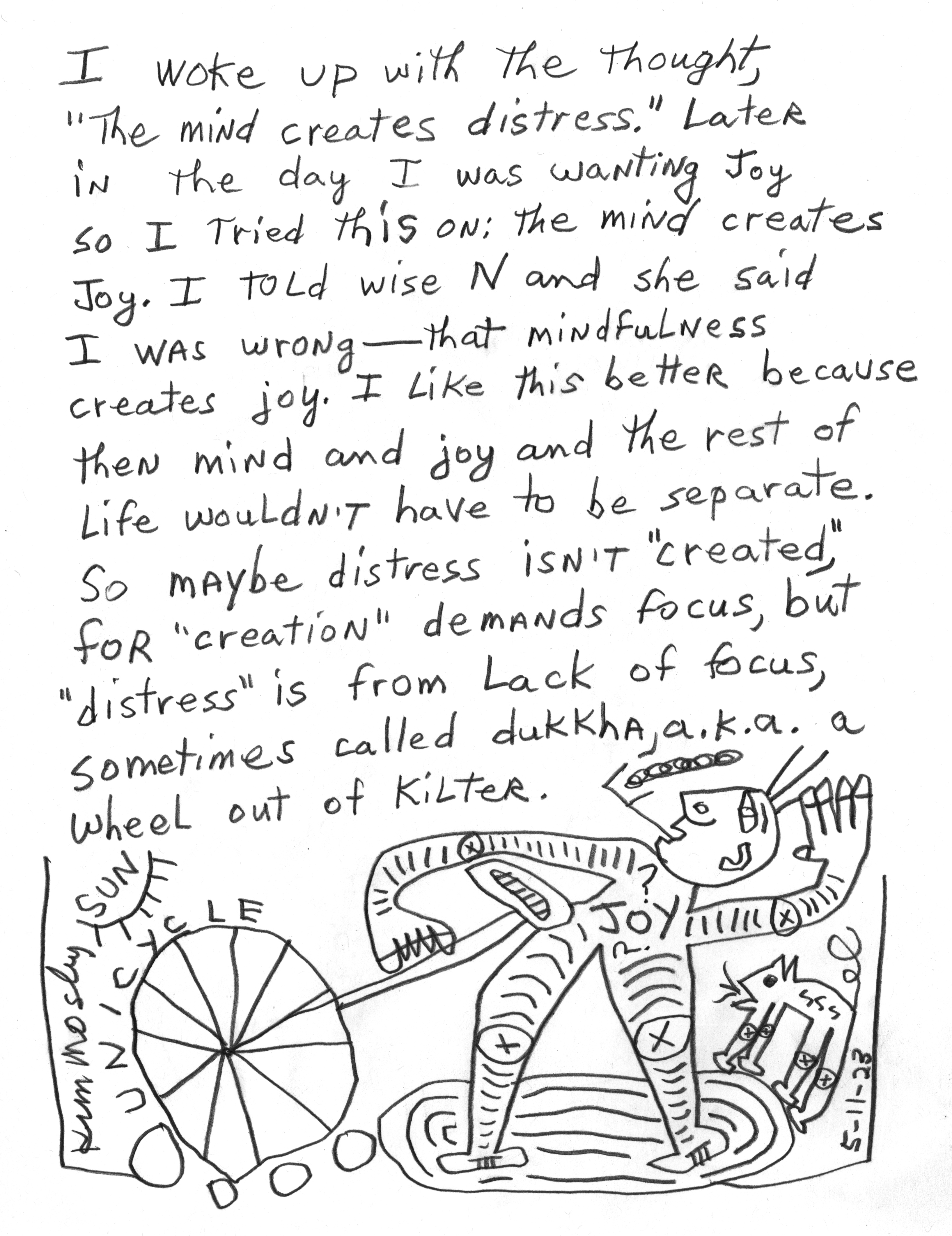
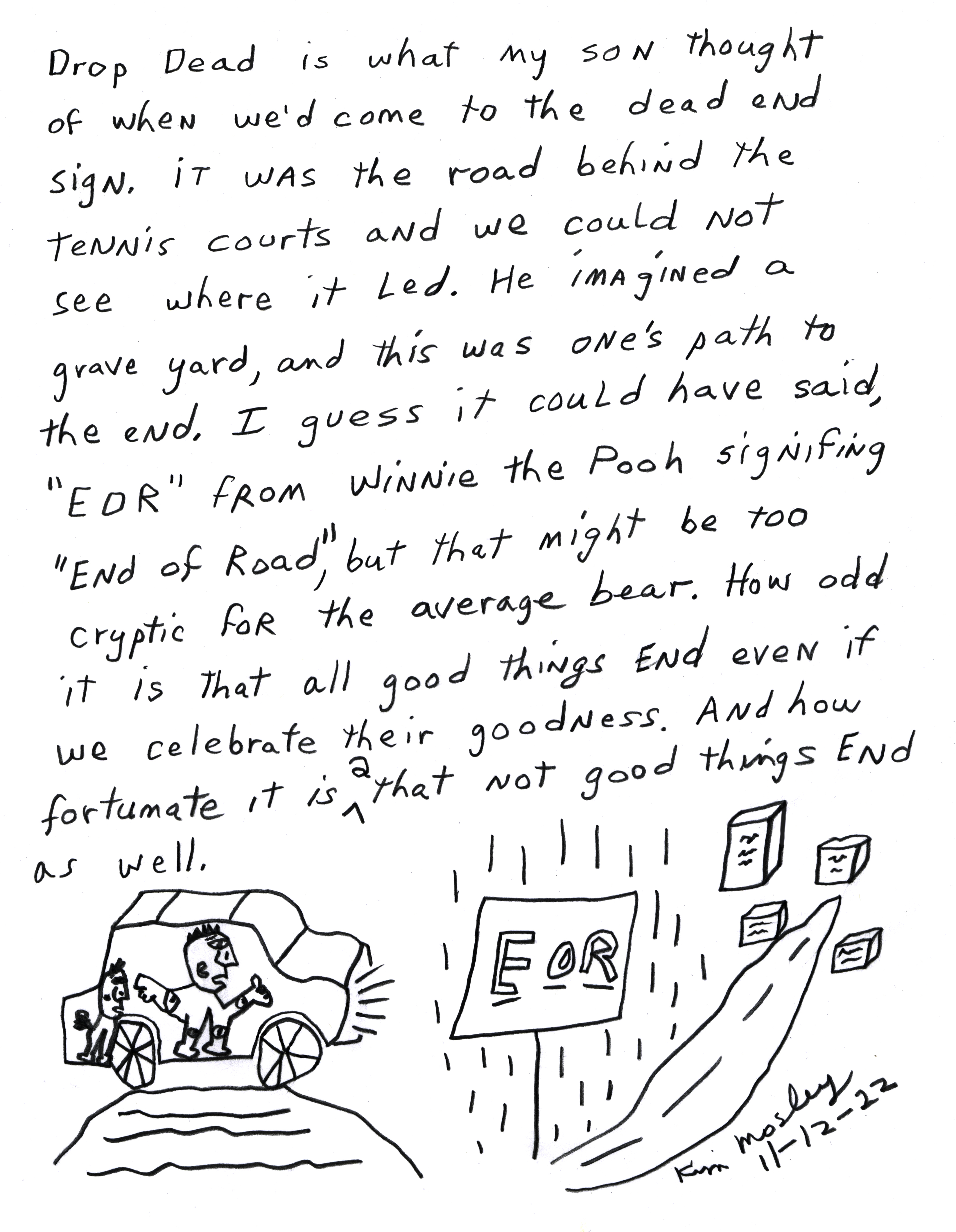
Imagination played a role here. But it wasn’t the imagination of making things up. To the contrary, I was asked once how I reconciled my work to that of the realists… and I responded that I’m a realist. I express what I’m feeling. I don’t like artists who make things up.
Which brings me to my pets. I have a rhino, a penguin, three dogs, and a half dog, half wolf. My wife says that they aren’t real… that they are just in my imagination. I insist that just because she can’t see them doesn’t mean they aren’t real. Lately she’s been more accepting that they might be real though not visible. Or maybe she’s just trying to humor me.
It was about a year ago when I made the web site for the Lay Zen Teachers Association. I worked with Al Rappaport and saw that he’d been teaching koans for a number of years. For about six months I’ve been working with him, meeting him weekly.
He started out asking me where I felt the koan in my body. I didn’t respond well to this but it did suggest that the koans weren’t discursive puzzles to figure out. I've discovered how I feel about things by looking at my drawings of them. In fact, as I started to look at some of the first drawings that I did of the koans, I saw that I had been expressing more than what I realized at the time.
Another of my teachers, Flint Sparks, would ask, “How simple are you willing to let it be?” It is quite amazing to me all the words spoken and written about Buddhism. And all the words about art. I remember in college doing a paper on Robert Frost and liking what he said when asked to explain one of his poems, “do you want me to tell you in other and worse language?” I feel that way about my drawings. However, for almost 60 years I have had a lot of words in my pictures. In fact, one of my painting/lithography teachers would tell me to get the words out of my pieces. I gave him one of my pieces with words and he hung it in the hallway of his house.
What was Buddha saying when he held up a flower? Kassapa got it with a smile. The other monks didn’t. It wasn’t that Buddha had a well-trained and discursive mind equal to few others. Rather, when he really had to say something profound, he held up a flower. Likewise, when Kassapa responded with a smile, he said more than all the grains of sand in the Ganges River.
My commentary below the drawings was written after the drawing was made. I saw things in the drawings that I didn’t initially see. Al would have me act out my response to the koan. Sometimes he would say, “You have it in the drawing.” So then I’d look again at the drawing and let my drawing speak to me.